Saint Paul Landscape Architects
Design-build landscaping for Summit Hill, Highland Park, Crocus Hill, Mac-Groveland, and Como Park. Expert solutions for bluff erosion, historic preservation, and clay soil drainage.
Landscaping Experts for Saint Paul Homes
Saint Paul landscaping demands specialized expertise that addresses the capital city's unique topography, historic character, and aging infrastructure. Our landscape architects have served Saint Paul neighborhoods for over 15 years, developing mastery of the challenges that make this city distinct: dramatic Mississippi River bluffs requiring engineered retaining systems, historic districts with preservation requirements, clay-heavy soils notorious for drainage problems, and combined sewer systems where on-site stormwater management becomes critical.
The Mississippi River bluffs define Saint Paul's most dramatic neighborhoods. Summit Hill, Crocus Hill, and portions of Highland Park perch on these escarpments, with properties commanding river valley views—and facing the erosion pressures that come with that elevation. Uncontrolled water flow accelerates the natural weathering of St. Peter sandstone, threatening foundations and occasionally triggering slope failures. Our geotechnical approach evaluates stability before designing retaining systems that will protect properties for generations.
Understanding Saint Paul Soil Conditions
Saint Paul sits on complex glacial geology that varies dramatically across short distances. Near the river, sandy soils over bedrock create good drainage but stability challenges. Move inland and heavy clay dominates—holding water for days after rain, swelling when wet, and shrinking when dry. This expansion and contraction stresses foundations, heaves patios, and creates the soggy lawn conditions that plague many Saint Paul homeowners.
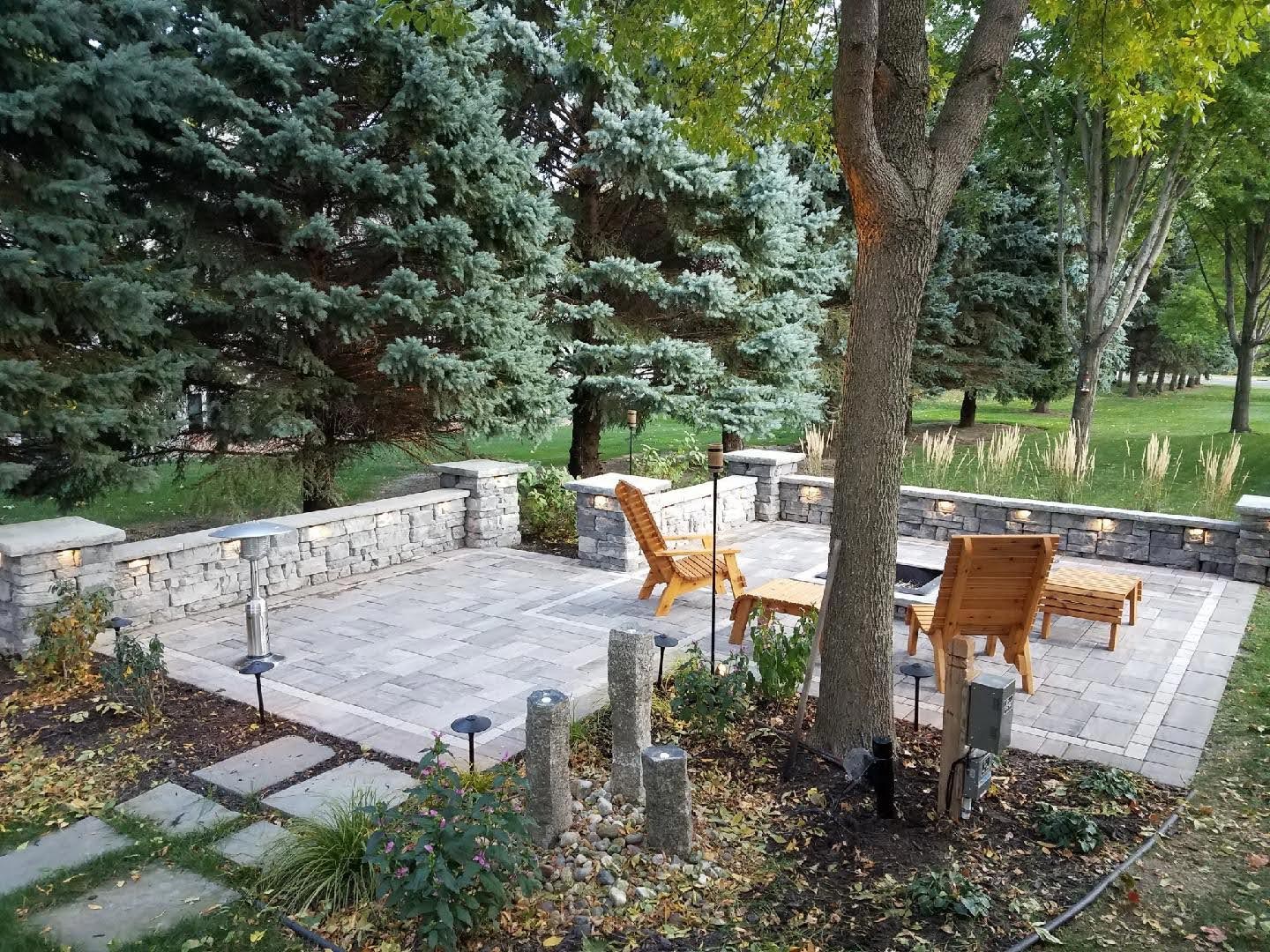
Every Saint Paul project begins with soil assessment. We test infiltration rates, identify clay horizons, and map drainage patterns before designing hardscape layouts. For patios and walkways, we specify proper base depths— typically 8-10 inches of compacted Class 5 aggregate—and incorporate drainage solutions that prevent water from saturating the base. This engineering-informed approach prevents the cracking, heaving, and settling that undermine projects built without adequate site preparation.
Historic District Considerations
Saint Paul's historic districts—Summit Avenue, Ramsey Hill, Crocus Hill, and others—preserve architectural heritage that extends to landscape design. The Heritage Preservation Commission reviews changes visible from public ways, evaluating material choices, design approaches, and even plant selections for compatibility with neighborhood character.
Our familiarity with HPC preferences streamlines the approval process. We maintain reference libraries of successful Saint Paul historic projects, demonstrating material combinations and design approaches that satisfy preservation requirements while meeting contemporary functionality needs. Natural stone, wrought iron, and traditional plant palettes complement Victorian, Romanesque, and Tudor architecture throughout Saint Paul's historic core.
Managing Stormwater in an Aging System
Many Saint Paul neighborhoods have combined sewer systems where storm water and sanitary sewers share the same pipes. During heavy rain, this creates capacity issues that can back up into basements and overflow into the Mississippi River. Managing stormwater on-site—through rain gardens, permeable pavers, and infiltration areas—reduces system loading while protecting individual properties.
The Capitol Region Watershed District increasingly requires stormwater management for larger hardscape projects. Rain gardens, bioswales, and permeable surfaces satisfy these requirements while providing genuine environmental benefit. We design these features as attractive landscape elements rather than utilitarian add-ons, integrating function with aesthetics throughout Saint Paul projects.
Saint Paul Neighborhoods We Serve
Each Saint Paul neighborhood has distinct character, topography, and landscaping traditions. Explore our neighborhood-specific expertise.
Common Saint Paul Landscaping Challenges
Bluff Erosion
Mississippi River bluffs require engineered retaining systems and proper drainage to prevent slope failures.
Clay Soil Drainage
Heavy clay holds water for days, threatening foundations and creating perpetually soggy conditions.
Historic Preservation
HPC requirements in historic districts affect material choices and design approaches.
Combined Sewers
Aging infrastructure means on-site stormwater management protects both your property and the city system.
Mature Tree Canopy
Deep shade from century-old trees requires specialized plant selections and construction techniques.
Varied Topography
Dramatic grade changes throughout Saint Paul require terracing and retaining wall expertise.
Our Saint Paul Services
Every service is adapted for Saint Paul conditions—bluff topography, clay soils, historic requirements, and stormwater management needs.
Why Saint Paul Homeowners Choose Us
Bluff Expertise
We understand the geotechnical challenges of Mississippi River bluff properties and design systems that ensure long-term stability.
Historic Compliance
Our familiarity with HPC requirements and historic design principles streamlines approvals and ensures period-appropriate results.
Drainage Engineering
Every Saint Paul project includes drainage assessment. We solve clay soil and slope runoff problems that protect your investment.
Full Permitting
From engineering certifications to HPC applications to watershed district compliance, we manage the complete permitting process.
Saint Paul Landscaping FAQs
What makes Saint Paul landscaping different from other Twin Cities areas?
Saint Paul's dramatic Mississippi River bluffs create unique challenges requiring retaining wall expertise and erosion control. Historic districts like Summit Hill have preservation requirements affecting material choices. The city's older infrastructure often means combined sewer systems where on-site stormwater management becomes critical.
Do I need permits for landscaping in Saint Paul?
Yes, many landscaping projects require Saint Paul permits. Retaining walls over 4 feet need engineering certification. Work in historic districts like Summit Hill requires Heritage Preservation Commission approval. Impervious surface additions may trigger watershed district review. We handle all permitting as part of our design-build process.
How do you handle bluff erosion on Saint Paul properties?
We begin with geotechnical assessment to evaluate slope stability and erosion patterns. Solutions include engineered retaining wall systems with proper drainage, terracing that reduces slope angles, and plantings that stabilize soil. Engineering certification is required for walls over 4 feet on slopes.
What drainage solutions work for Saint Paul clay soils?
Saint Paul's heavy clay soils hold water for days, threatening foundations and creating soggy conditions. We install French drain systems to redirect water, use permeable pavers where appropriate, create rain gardens that filter runoff, and design grading that moves water toward proper discharge points.
How long do Saint Paul landscape projects typically take?
Timeline depends on scope: patio installations typically take 1-2 weeks, full backyard transformations 3-6 weeks, and bluff stabilization projects 4-8 weeks. Historic district approvals can add 4-6 weeks for HPC review. We provide detailed timelines during the proposal process.
Can you work with mature trees in Saint Paul neighborhoods?
Saint Paul's mature tree canopy is protected by ordinance. We design around these valuable assets, protecting root zones during construction and specifying shade-tolerant plantings. Our arborist-informed approach preserves the trees that define Saint Paul neighborhoods while creating functional outdoor spaces.
Ready to Transform Your Saint Paul Property?
Schedule a free on-site consultation. We'll assess your property, discuss design possibilities, and provide a detailed proposal tailored to your Saint Paul home.
About Saint Paul, Minnesota
Saint Paul, MN
Ramsey County, Minnesota
Saint Paul is the capital city of the U.S. state of Minnesota and the county seat of Ramsey County. As of the 2020 census, the city had a population of 311,527, making it Minnesota's second-most populous city. Saint Paul and neighboring Minneapolis form the core of the Twin Cities metropolitan area, the third most populous in the Midwest.
Source: Wikipedia